
Who Was That Masked Man?
Words of Wisdom with Rabbi Efrat Zarren-Zohar
This Dvar Torah on Parashat Vayishlach was written by Rabbi Jeffrey K. Salkin, the co-founder/co-director of Wisdom Without Walls: an online salon for Jewish ideas. His most recent book is Inviting God In: A Guide to Jewish Prayer (CCAR Press).
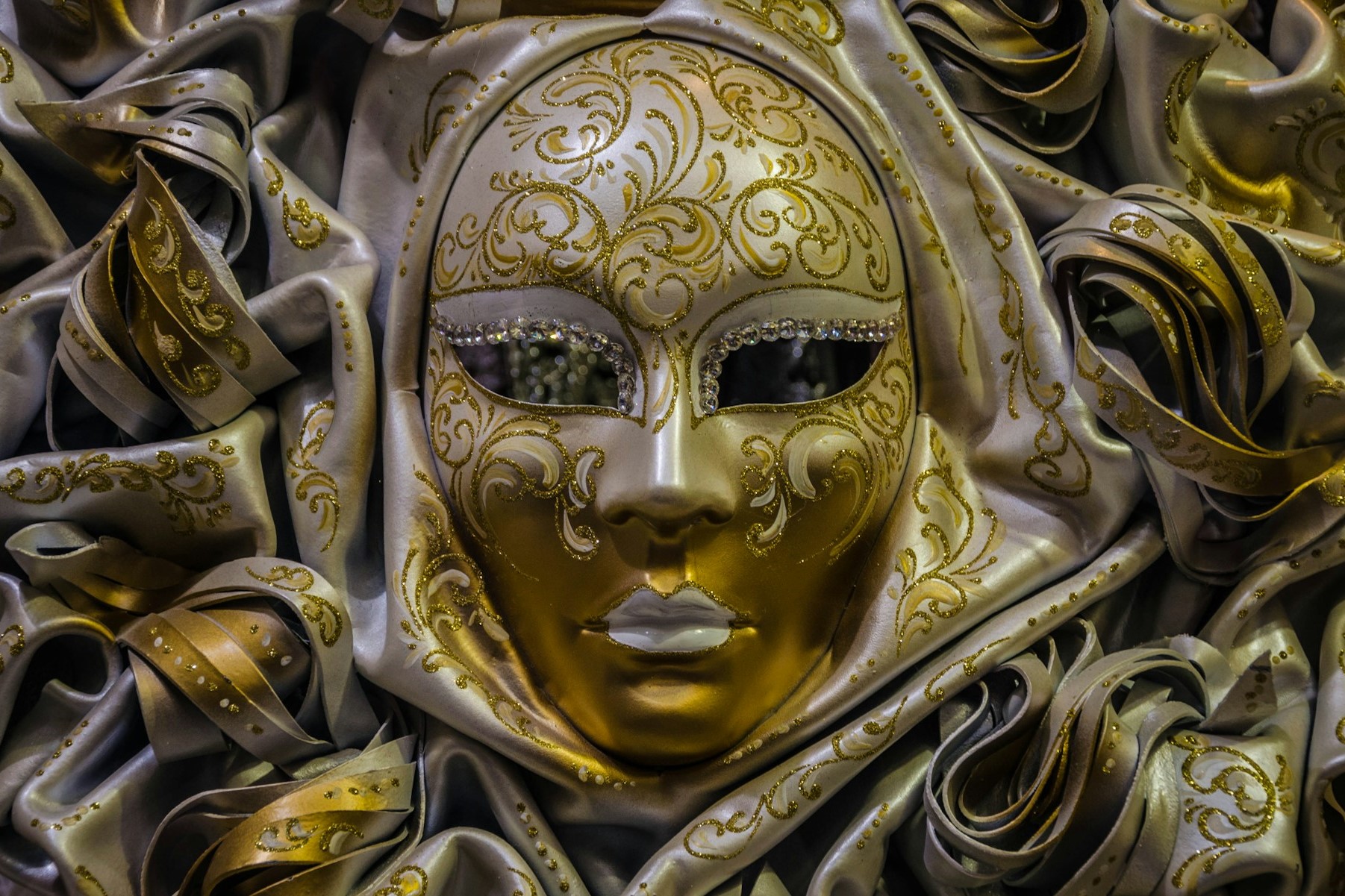
Photo by Vlad Hilitanu on Unsplash
Let’s set the scene. Jacob is on his way home after twenty years with his trickster father-in-law, Laban.
The exile is over. Jacob has wealth, wives, children, and — perhaps for the first time — a sense that life might finally be settling into something like normalcy.
And then, reality intrudes.
Jacob remembers that he has unfinished business. Namely: Esau — the brother he cheated, the brother who vowed to kill him, the brother whose anger has echoed in Jacob’s mind for two decades.
Jacob sends his entire family across the Jabbok River. He is left alone on the far bank — a man with nothing but the night and his thoughts.
A nameless “man” appears and wrestles with Jacob until dawn.
By daybreak, Jacob is wounded, but he has also received something far greater: a new name, Yisrael -- the one who wrestles with God and with human beings — and somehow prevails.
Who was that man? Jews have been asking that question for centuries.
Does it matter? Absolutely, because each interpretation reveals something essential about the Jewish mission in the world.
The first possibility is the classic one: the stranger is an angel.
Hosea says it clearly (12:4). RaSHBaM, the grandson of RaSHI, affirms that identity. His contemporary, Rabbi David Kimchi, (RaDaK) says that he was, in fact, the angel Gabriel.
God sent this angel for a reason: to strengthen Jacob’s courage.
Because wrestling with an angel is a great warm up for a potential battle with your brother. God is saying: Before you face Esau, you must first face something bigger.
If this were a Western story, it would end with the hero galloping off into the sunset.
But it’s a Jewish story, and it requires the hero limping off into the sunrise.
Yet, Jacob’s limping is only physical. Spiritually, he stands taller inside himself. The night has given him clarity, resolve, a steadier heart.
The second possibility is that the stranger is the guardian angel of Esau. This is the tradition that both the Midrash (Bereishit Rabbah) and RaSHI preserve.
Why is this important? Because Esau, Jacob’s brother, becomes a symbol of the Roman Empire – and, after the conversion of the Empire to Christianity, to Christian power itself.
Here, Jacob’s nocturnal fight embodies the struggle of the Jewish people throughout the generations.
The nations that seek to harm Israel, the forces that rise against Jewish life and continuity — these are Esau’s angel.
Jacob’s victory represents not triumphalism, but endurance, survival, and the stubborn refusal to disappear.
Being a Jew has always required stamina. Jacob’s bruises are the bruises of Jewish history. His resilience is our inheritance.
To say “Jacob prevailed” is not to boast; it is to describe the miraculous fact of Jewish existence.
The third possibility is the one that seems the most obvious: that the stranger was God.
Elie Wiesel, in Messengers of God, makes that abundantly clear; he insists it deserves attention, because Jacob himself says, “I have seen God face to face.”
If so, this moment becomes the defining portrait of Jewish spirituality. Not submission, not silent piety, but engagement and, sometimes, often even, direct confrontation.
Jews don’t just believe; we wrestle. We question. We push back.
We cling to God and contest God at the same time.
This reading affirms a mature, grown-up faith. A faith that understands that intimacy with God can be fierce.
The spiritual life isn’t always calm — it is often grappling in the dark, holding on until the blessing emerges.
Finally, there is the possibility that the stranger was Jacob who wrestles himself.
Rabbi Jonathan Sacks extends the idea:
“More than anyone else in Genesis, Jacob is surrounded by conflict: not just between himself and Esau, but between himself and Laban, between Rachel and Leah, and between his sons, Joseph and his brothers. It is as if the Torah were telling us that so long as there is a conflict within us, there will be a conflict around us. We have to resolve the tension in ourselves before we can do so for others. We have to be at peace with ourself, before we can be at peace with the world.”
No one wrestles with their own soul and comes away unscarred.
Yisrael—the one who has wrestled with himself and is therefore ready to wrestle with the world.
So which interpretation is correct? The angel? Esau’s protector? God? Jacob’s own psyche?
Perhaps the beauty of this story is that all of them are true.
Life gives us different opponents at different times. Some are divine tests. Some are adversaries. Some are internal battles we’ve avoided for too long.
Sometimes we limp. Sometimes we prevail. Often, we do both at once.
Jacob’s story teaches that the sacred is found not in avoiding the struggle but in entering it. In refusing to let go until a blessing emerges.
In accepting that transformation often begins in the dark.
Raina Maria Rilke understood this when he wrote (“The Man Watching”):
Whoever was beaten by this Angel
went away proud and strengthened
and great from that harsh hand,
that kneaded him as if to change his shape.
Winning does not tempt that man.
This is how he grows: by being defeated, decisively,
by constantly greater things.
Jacob’s night at the Jabbok reminds us that we become our truest selves not through ease, but through wrestling; not by escaping the struggle, but by embracing it.
Our limp can be part of our blessing. And the night can bring us a new name.


